Our Research Focus
At RESCONS, our research group specializes in the broad area of process modelling, combining both experimental and theoretical approaches.
We support chemical and metallurgical industries by optimising industrial processes to improve energy efficiency and raw material utilization.
Many metallurgical smelting and chemical separation processes are inherently complex, involving non-uniform particle flow and interactions with one or more fluid phases.
Accurate modelling of particle, droplet, and bubble behaviour—including coalescence and break-up—is critical for process optimisation. Therefore, our research is focused on two core pillars:
Important Fundamental Research Contributions
RESCONS research group introduced the concept of raceway / cavity hysteresis in packed, spouted, and fluidized beds and explained its formation both experimentally and theoretically, significantly improving understanding of these systems.
We proposed the concept of discrete liquid flow in porous media under low flow or non-wetting conditions, where continuum theory fails. This theory has been experimentally verified and is now used by researchers across disciplines.
For the first time, our group proposed a graph-based method to determine void shape and size in packed beds, addressing a long-standing gap in the literature.
Important Applied Research Contributions
RESCONS introduced robust procedures to measure powder static and dynamic holdup in multiphase flow systems using mass balance and elutriation velocity concepts, resolving long-standing inconsistencies in results across studies.
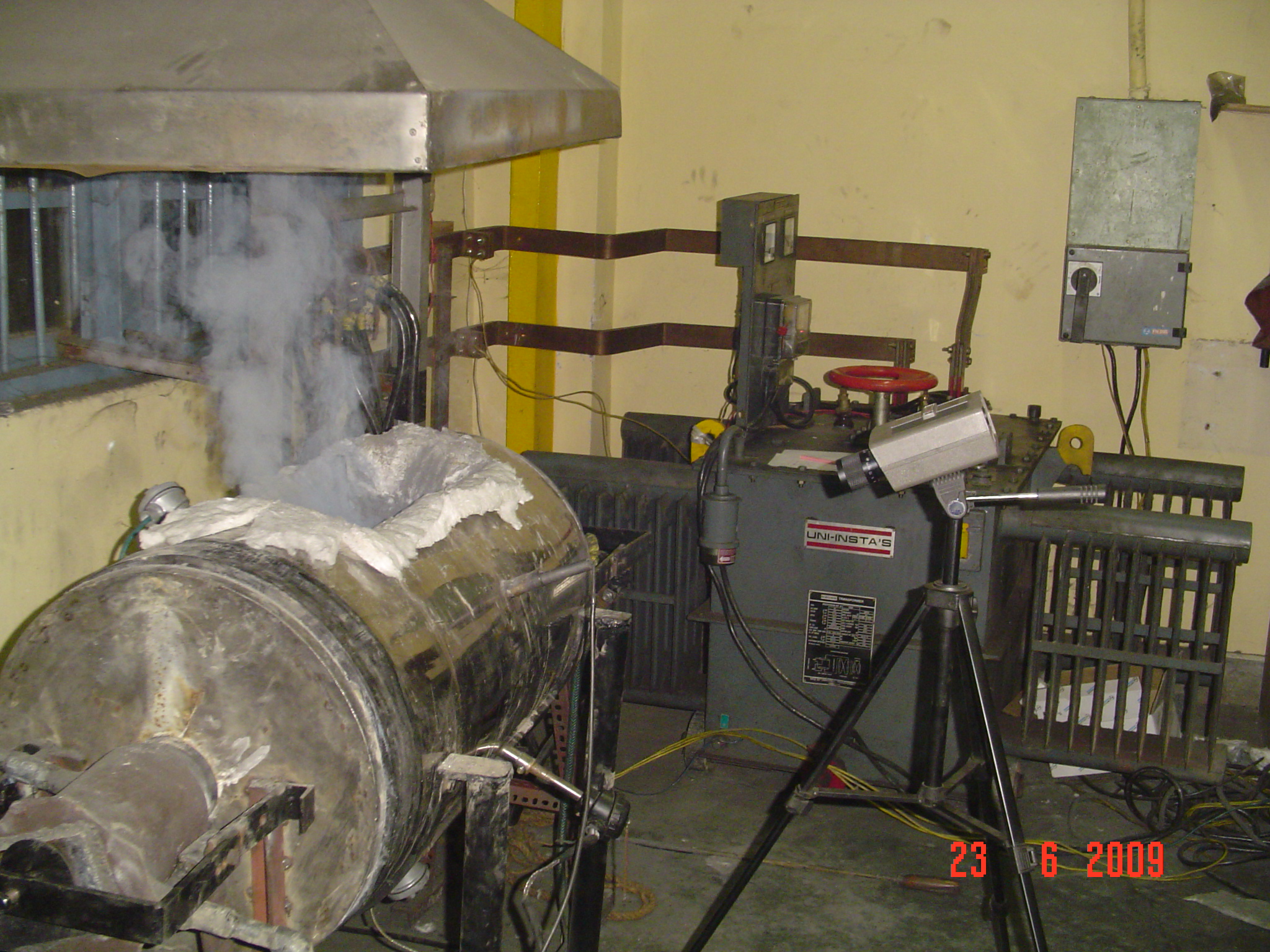
We developed a novel flow visualization technique using X-ray radiography for porous media and introduced a new method to accurately measure temperatures up to 3500°C in resistance furnaces.
Current Research Activities
Gas–Liquid Flow through Packed Beds
Investigating the dynamics of gas–liquid interactions within packed bed systems.
Rare Earth Element Extraction
Design and synthesis of selective extractants for Nd recovery from fly ash of thermal power plants.
India Just Transition
Biomass substitution in coal-based DRI pilots and trials (Funded by Angela Wright Bennett Foundation, Australia).
Gas–Fines Flow in Stationary & Moving Beds
Examining pulverized coal injection behaviour in blast furnaces.
Flow Visualization in Packed Beds
Enhancing understanding of flow patterns in packed bed reactors.
Raceway / Cavity Hysteresis in Beds
Analysing hysteresis effects in stationary and moving beds.
Granular Flow in Packed Beds
Studying granular flow dynamics in Direct Reduced Iron (DRI) processes.
Granulation & Iron Ore Sintering
Exploring granulation processes and integration with iron ore sintering.
Manufacturing of Silicon Carbide
Developing silicon carbide production technologies ready for industrial application.
Manufacturing of Boron Carbide
Advancing boron carbide manufacturing techniques ready for industrial application.
Spray Forming
Investigating spray forming techniques for advanced material processing.
REDA – Revolutionary Degassing Activator
Innovating new approaches for industrial degassing processes.
Surface Treatment – Gas Carburizing
Optimising gas carburizing techniques ready for industrial adoption.
Surface Treatment – Pack Carburizing
Developing pack carburizing methods for enhanced material treatment.
Heap Leaching
Advancing heap leaching using discrete liquid flow theory for multi-particle systems.
Optimizing Zinc Coating on Ductile Iron Pipes
CFD-based optimisation of zinc coating processes.
Rare Earth Elements Extraction
Extracting rare earths from phosphogypsum, with ADANI utilising the technology.
Hydrogen Reduction of Iron Ore
Researching hydrogen-based iron ore reduction processes.
Green Ironmaking
Sustainable ironmaking practices with CSIRO (Australia).
Replacement of Sand with Blast Furnace Slag
Using blast furnace slag as a sustainable replacement in water pipe inner coatings.